Fintech has no shortage of media attention, but not all publications play the same role. Some sit at the heart of the banking and payments industry. Others focus on founders, funding and startup growth. Some influence policymakers and institutional finance, while others shape conversations across the wider technology ecosystem. For fintech brands and the PR agencies which represent them, understanding those differences matters. The right publication can build credibility, reach influential audiences and help shape the conversations which define the industry.
Below is a guide to some of the most important fintech and fintech-adjacent media outlets operating in the UK today.
Table of Contents
The Fintech Times
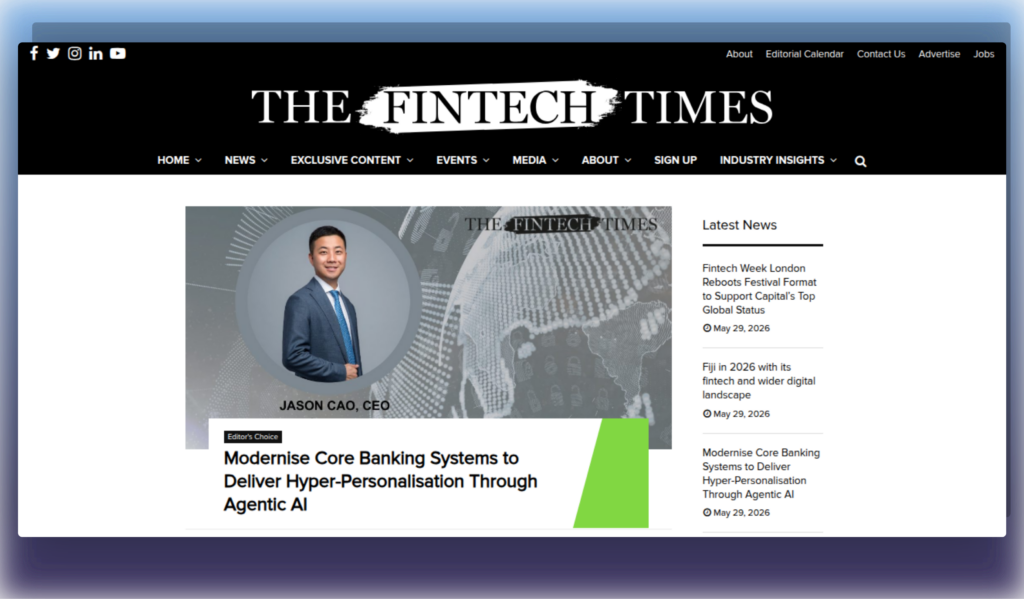
Website: https://thefintechtimes.com
Key editorial leadership: Jason Williams (CEO), Mark Walker (CEO & Editorial Director), Claire Woffenden (Editor at Large), Polly Harrison (Features Editor)
Visibility & reach (source):
- 65,000+ monthly online visitors
- 150,000+ annual print newspaper circulation
- 20,000+ newsletter subscribers
Overview
Founded in 2016 and originally launched as a print newspaper, The Fintech Times has evolved into a multimedia brand spanning news, interviews, newsletters, webinars, reports and events. Coverage spans payments, digital banking, regtech, AI, blockchain and insurtech, with a strong focus on the people, businesses and ideas shaping the sector.
Audience and readership
The audience is rooted in the fintech community itself, including founders, banking innovation teams, technology providers, investors and advisers. Through initiatives such as The Fintech Power 50, the publication has become a recognised part of the industry’s wider network and events ecosystem.
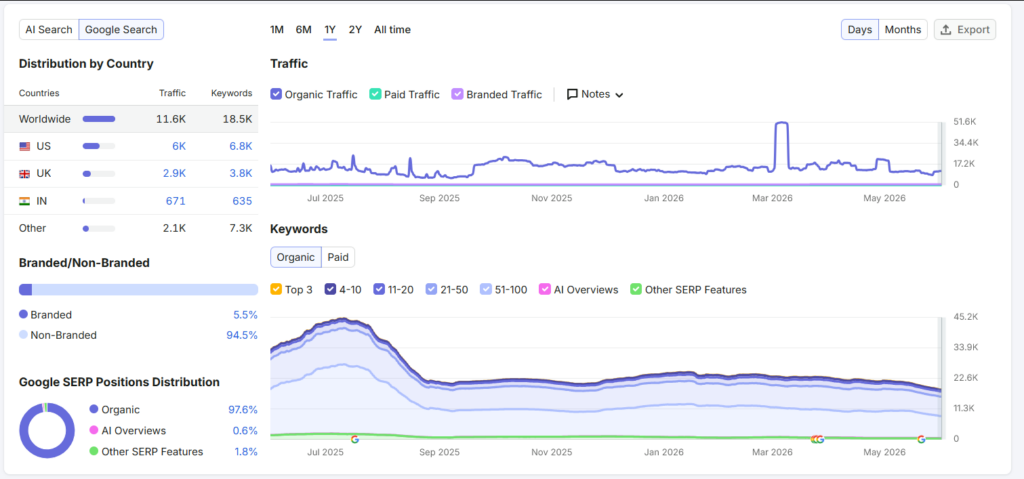
Organic search visibility (SEMrush)
Why fintech vendors should care
The Fintech Times is a useful publication for building recognition within the fintech sector, particularly for challenger brands, scaleups and technology providers. Alongside company news, the editorial team regularly publishes commentary, interviews and industry perspectives, creating opportunities to stay visible between major announcements. Its international focus also makes it attractive for businesses looking to raise their profile across multiple markets.
Why PR agencies should pay attention to it
One of the publication’s biggest strengths is the range of opportunities available beyond traditional news coverage. Interviews, contributed content, webinars, reports and events all create additional ways to support broader awareness and positioning campaigns.
Editorial considerations and PR approach
Stories perform best when they tap into wider industry conversations rather than focusing solely on a company announcement. Regulation, AI, embedded finance, banking transformation and changing customer expectations are recurring themes. Timely commentary, informed predictions and original data often generate more interest than overtly promotional messaging.
FinTech Futures
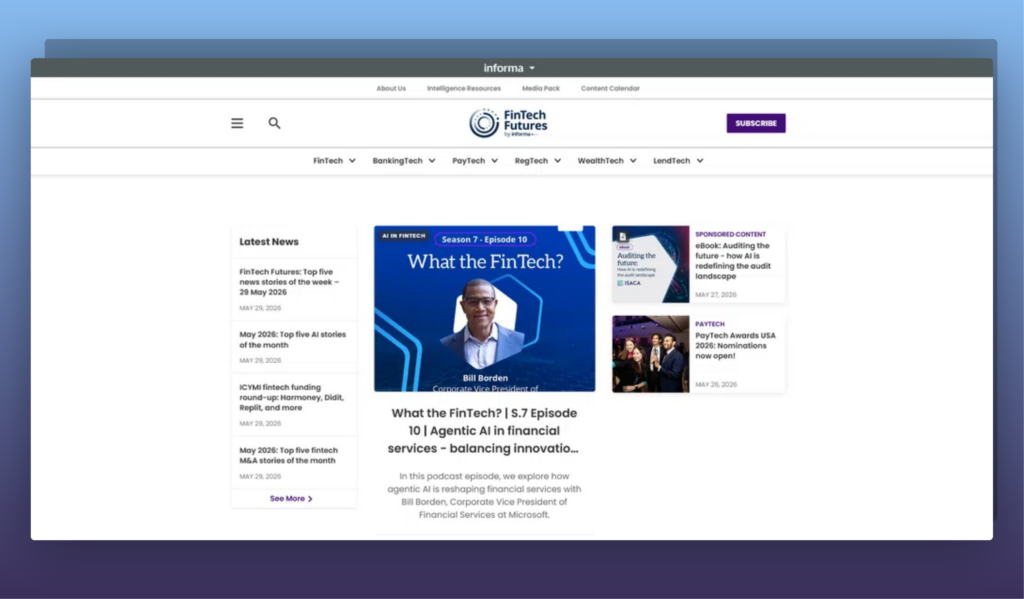
Website: https://www.fintechfutures.com
Tagline: “The #1 provider of global fintech news and intelligence”
Editor: Paul Hindle
- Visibility & reach (source):
- 250,000+ monthly website visitors
- 150,000+ active industry contacts
- 90,000+ newsletter subscribers
- 175,000+ social followers
Overview
Built on the legacy of Banking Technology magazine, FinTech Futures is one of the more established news sites covering the intersection of financial services and technology. Coverage spans banking transformation, payments, regulation, wealth management and financial infrastructure, supported by a wider mix of webinars, reports, podcasts, awards and industry events.
Audience and readership
Its readership is firmly rooted in the enterprise side of financial services, including banks, financial institutions, technology providers and teams responsible for digital transformation. Compared with startup-focused fintech titles, FinTech Futures has a more institutional feel and strong credibility within traditional financial services circles.
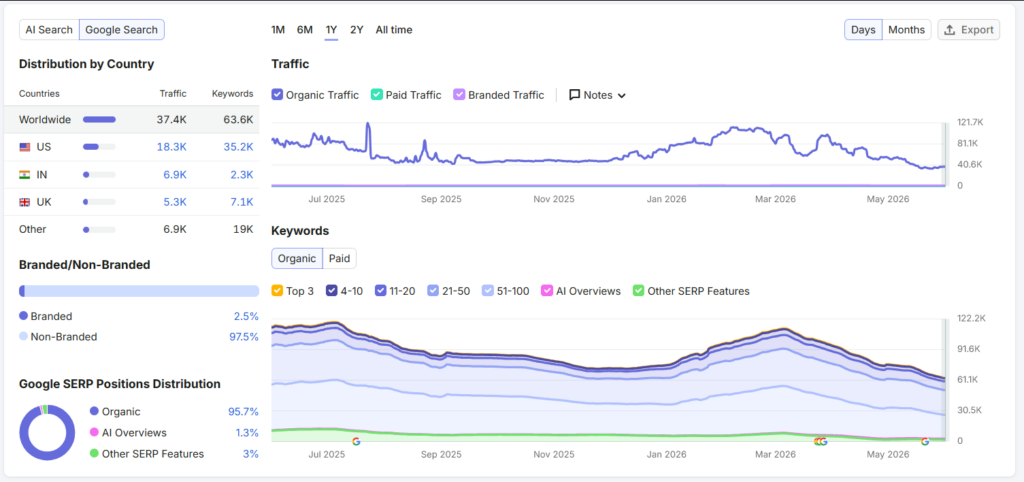
Organic search visibility (SEMrush)
Why fintech vendors should care
Payments, compliance, fraud prevention, banking technology and enterprise software are all natural areas of interest, making the publication a strong fit for B2B fintech companies looking to engage senior industry audiences.
Why PR agencies should pay attention to it
Coverage can put a brand in front of banking executives, transformation teams and technology leaders rather than the wider fintech community alone. Its links to initiatives such as the Banking Tech Awards and PayTech Awards also provide opportunities which extend beyond editorial coverage.
Editorial considerations and PR approach
Stories around regulation, infrastructure modernisation, AI adoption, payments innovation and operational efficiency are a natural fit. Data-backed insight and expert analysis typically resonate more strongly than product launches or consumer-focused fintech announcements.
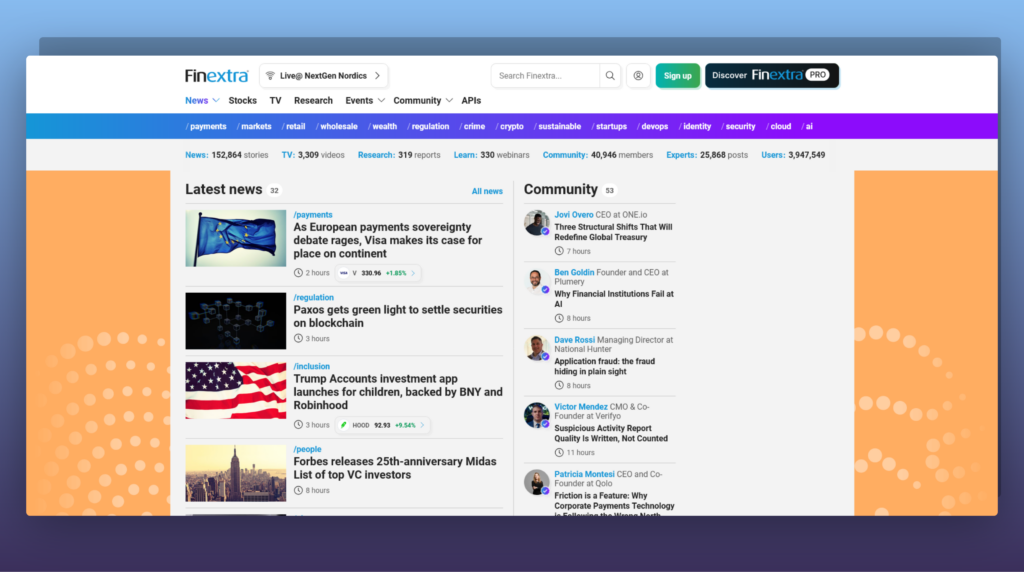
Finextra
Website: https://www.finextra.com
Tagline: “The leading global newswire, information resource and community platform for financial technology professionals worldwide”
Visibility & reach (source):
- 40,000+ member community
- Millions of annual global visitors
- 18,000+ webinar delegates in the past 12 months
- 3,300+ FinextraTV interviews
Overview
Finextra has been a fixture of financial technology media for more than two decades. Its coverage sits at the intersection of banking, payments, regulation and the technology powering modern financial services. Alongside daily reporting, the brand has built a substantial ecosystem around research, webinars, video content and industry events.
Audience and readership
This is not a founder-focused publication – its readership is made up largely of professionals responsible for implementing, managing and buying technology within financial services organisations. That gives the publication a distinctly practical, operational perspective compared with many fintech titles.
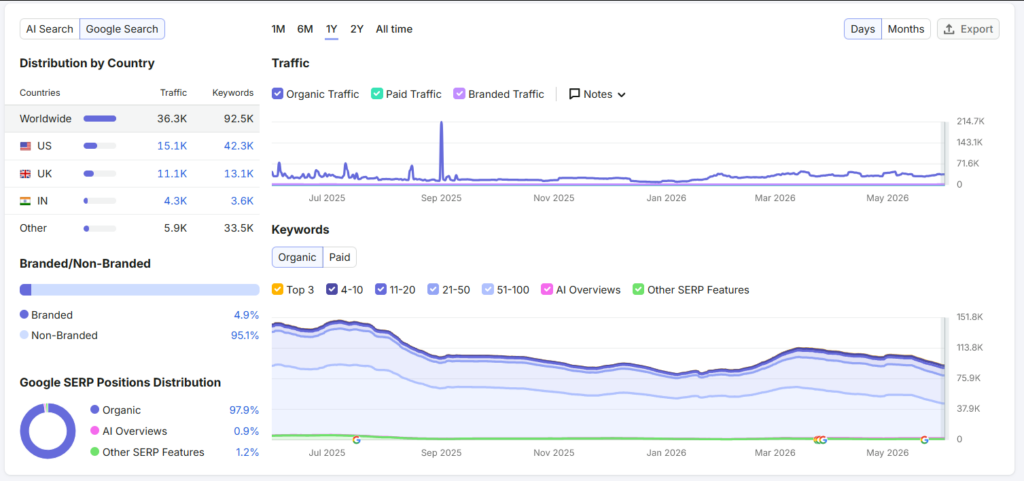
Organic search visibility (SEMrush)
Why fintech vendors should care
Companies solving complex problems tend to perform well here. Whether that’s fraud, compliance, payments, infrastructure, AI or operational efficiency, Finextra provides access to the people most likely to understand both the challenge and the proposed solution.
Why PR agencies should pay attention to it
Finextra is often more useful when the objective is credibility with specialist audiences. Its webinars, research programmes and FinextraTV interviews also create opportunities to showcase expertise in a more substantive way than solely traditional news coverage.
Editorial considerations and PR approach
A good test is whether the story would still be interesting if you removed the company name. If the angle revolves around a wider operational, regulatory or technology issue affecting financial services, there’s a strong chance it will resonate. Product announcements without a broader industry hook are likely to struggle.
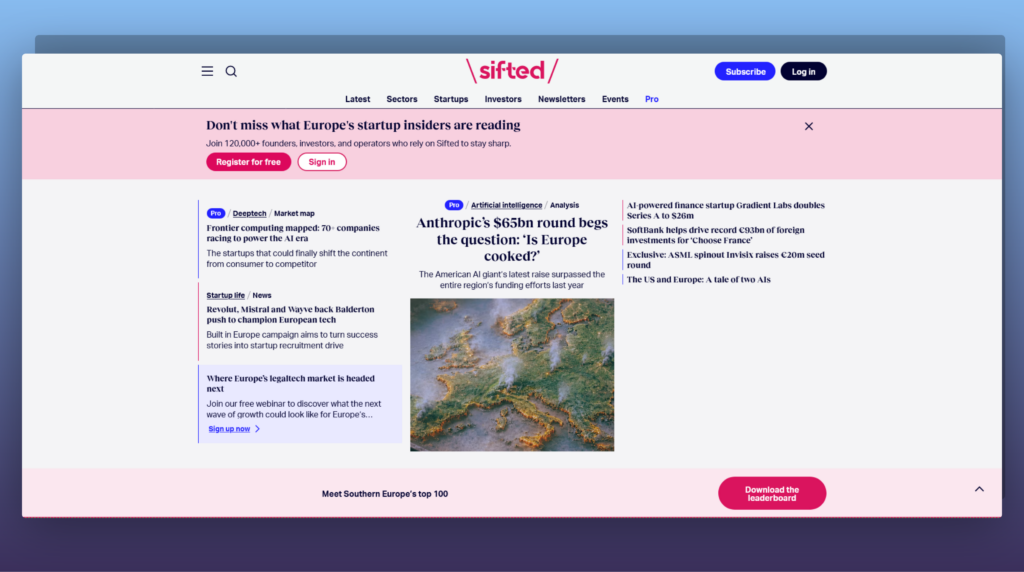
Sifted
Website: https://sifted.eu
Tagline: “The leading media brand for the European startup community”
Editor: Amy Lewin
Visibility & reach (source):
- 537,000+ average monthly website visits
- 215,000+ email audience
- 173,000+ social followers
Overview
Sifted has established itself as a go-to publication for founders, investors and operators tracking Europe’s startup economy. While fintech features heavily, it sits alongside AI, climate tech, healthtech, deeptech and enterprise software. The common thread is growth: who is raising money, scaling successfully, entering new markets or struggling to do so.
What separates Sifted from many startup publications is its willingness to challenge the industry. Alongside founder success stories, the publication regularly investigates workplace culture, investor behaviour and some of the less glamorous realities of startup life.
Audience and readership
Founders, operators and investors are the mainstay of the readership. The publication has built particularly strong influence within Europe’s venture-backed startup community, making it a regular read for people tracking funding activity, emerging companies and technology trends across the continent.
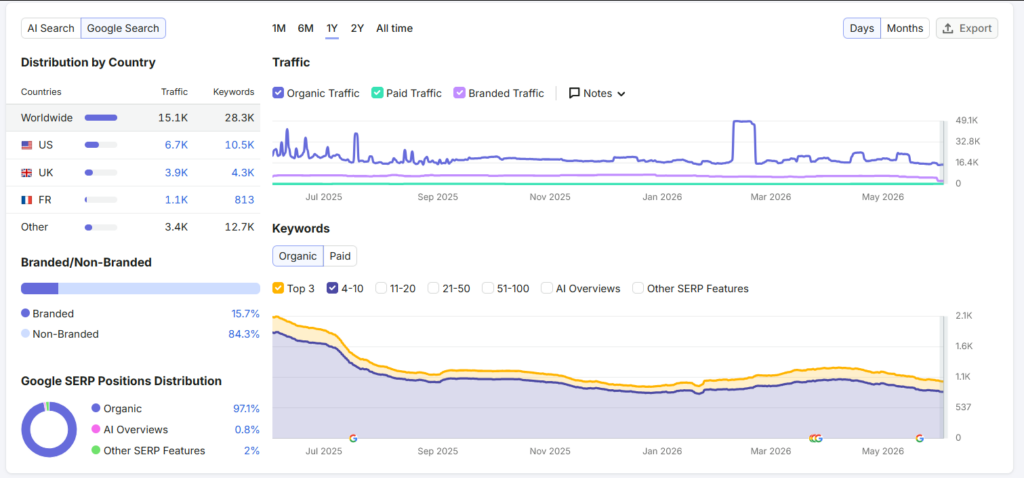
Organic search visibility (SEMrush)
Why fintech vendors should care
Sifted is less about reaching customers and more about building reputation within the startup ecosystem. Fundraising, expansion, acquisitions, hiring plans and founder stories all fit naturally within its coverage. Companies looking to attract investors, talent or strategic partners are likely to find more value here than those focused solely on lead generation.
Why PR agencies should pay attention to it
A strong story in Sifted can travel well beyond the article itself, often reaching founders, investors and startup operators who shape conversations across the wider technology market.
Editorial considerations and PR approach
Sifted is interested in what it actually takes to build and scale a company. Funding announcements will always attract attention, but founder lessons, operational challenges, difficult decisions and market tensions can be just as compelling. The publication also has a clear preference for strong opinions and original thinking over polished corporate messaging. If a story feels overly promotional, it is probably better suited elsewhere.
UKTN
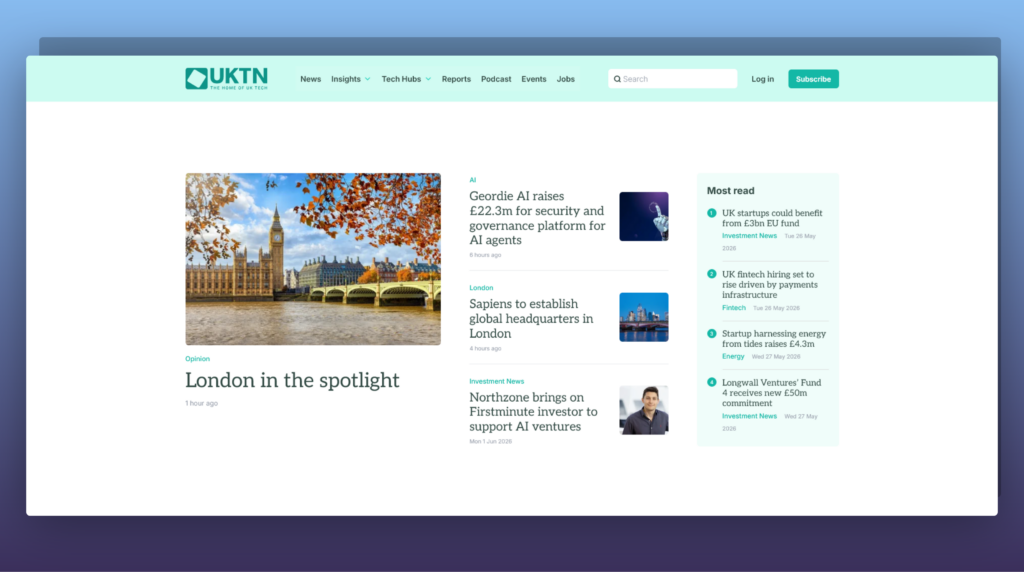
Website: https://www.uktech.news
Tagline: “The go-to online media brand for the UK technology industry”
Editor: Jessica Nangle
Visibility & reach (source):
- 300,000 average monthly website visits
Overview
UKTN covers the UK technology sector in all its forms, from early-stage startups and scaling businesses to established tech unicorns. While fintech is a regular feature, it sits alongside AI, SaaS, deeptech, climate tech and the wider innovation economy. The publication also places a strong emphasis on regional technology hubs, reflecting how the UK’s startup ecosystem has expanded well beyond London.
Audience and readership
The readership is made up of founders, investors, operators and advisers following the growth of the UK technology and cleantech market. Its national focus gives it particular relevance for businesses looking to build awareness across the wider startup and investment community, rather than within a single sector.
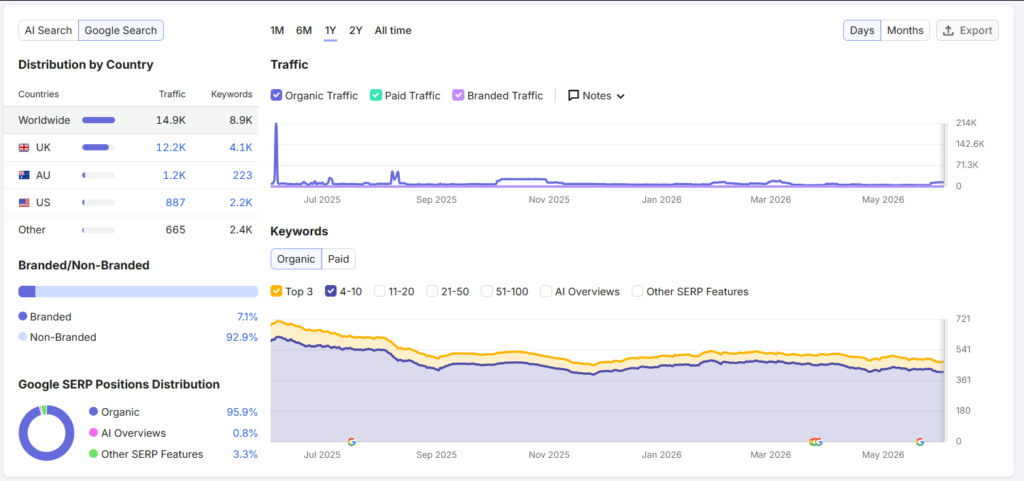
Organic search visibility (SEMrush)
Why fintech vendors should care
Fintech companies often overlook UKTN because it isn’t a dedicated financial services title but that’s precisely what makes it useful. The publication puts fintech stories in front of a broader audience of investors, entrepreneurs and technology businesses, making it particularly relevant for companies raising capital, expanding into new markets or building their profile within the UK startup ecosystem.
Why PR agencies should pay attention to it
UKTN sits at the centre of many of the conversations shaping the UK’s technology sector, from investment trends and government policy to regional growth and entrepreneurship. For agencies, it can provide a route into audiences that sit beyond fintech, helping position clients within the wider technology landscape.
Editorial considerations and PR approach
Growth is the common thread running through much of UKTN’s coverage. Funding rounds, acquisitions, hiring plans, expansion stories and policy developments all tend to attract attention. Strong founder narratives also perform well, particularly when they offer insight into wider trends affecting the UK technology market. Stories that feel relevant only to the fintech sector are generally better suited to specialist fintech media.
City A.M.

Website: https://www.cityam.com
Tagline: “Business with Personality”
Key editorial figure: Christian May
Visibility & reach (source):
- 70,000 newspaper copies distributed daily
- 35,800 newsletter subscribers
- 280,000+ social media followers
Overview
For more than two decades, City A.M. has been a fixture of London’s business and financial landscape. Originally known for its free newspaper distributed across the City, the brand has evolved into a multi-platform business publication spanning digital news, newsletters, events, podcasts, video and social media. Fintech features regularly throughout its coverage, but usually as part of a wider conversation around business, markets, investment, regulation and economic growth.
Audience and readership
The readership is heavily concentrated among business professionals, entrepreneurs, investors and executives working across finance, law, consulting and professional services. While its roots remain firmly in the City of London, the publication has broadened its reach through digital channels and now attracts a much wider UK business audience.
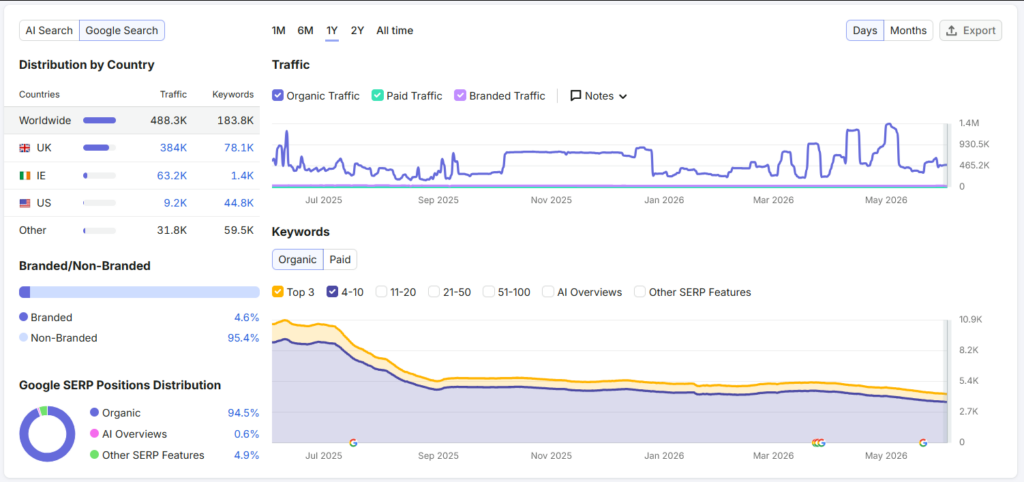
Organic search visibility (SEMrush)
Why fintech vendors should care
City A.M. comes into its own when a fintech story has relevance beyond the fintech sector itself. Funding rounds, leadership appointments, regulatory developments, consumer finance trends and major growth milestones form the majority of coverage. For many companies, it can provide a bridge between specialist fintech media and the wider business press.
Why PR agencies should pay attention to it
Few publications sit as comfortably between financial services, politics and business. That gives City A.M. the ability to introduce fintech brands to audiences which may never read a dedicated fintech title. It’s particularly useful for executive profiling, market commentary and stories with broader commercial significance.
Editorial considerations and PR approach
A useful test is whether the story would interest someone who doesn’t work in fintech. If the angle touches on entrepreneurship, investment, regulation, consumer behaviour or the wider economy, there’s a good chance it will resonate. Highly technical product stories generally need a stronger business hook before they become compelling editorial material.
Financial News (FN London)
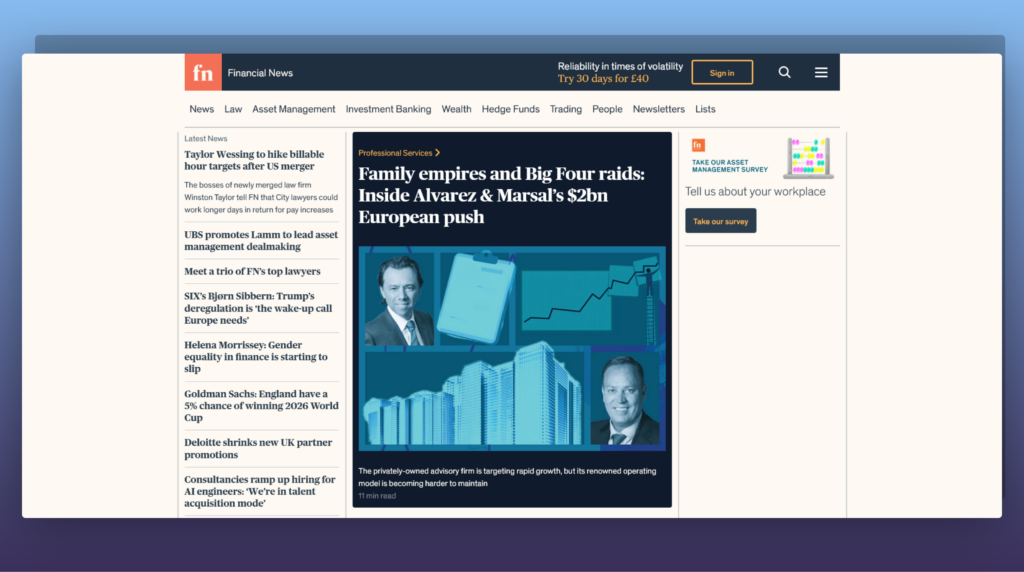
Website: https://www.fnlondon.com
Editor: Shruti Tripathi Chopra
Visibility & reach (source):
- 132,000+ paid subscribers
- 25,500+ newsletter subscribers
- 54% of readers are senior management, board-level or C-suite executives
Overview
Founded in 1996, Financial News covers the people, firms and deals shaping the City of London and wider financial services industry. Its reporting spans investment banking, asset management, wealth management, hedge funds, regulation, professional services and financial markets. While fintech features regularly, it is typically covered through the lens of its impact on established financial institutions rather than the startup ecosystem.
Audience and readership
The publication describes its audience as spanning investment banking, fund management, legal services, professional services, regulators and financial services providers. Compared with most fintech publications, the readership is likely to be more institutional, senior and commercially focused.
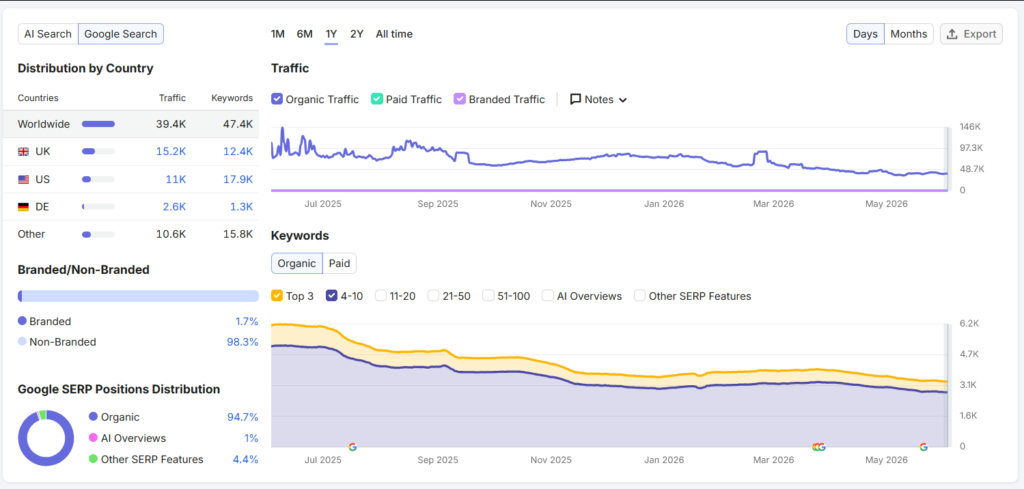
Organic search visibility (SEMrush)
Why fintech vendors should care
For fintech firms targeting institutional finance, Financial News offers something many startup-focused publications cannot: direct relevance to the people making technology, investment and operational decisions inside financial services organisations.
Why PR agencies should pay attention to it
A mention in Financial News can carry significant weight among senior financial services professionals, but stories need a clear connection to the priorities and challenges facing institutional finance. PR agencies would do well to esnure that the messaging is always clear and focused on the right audience.
Editorial considerations and PR approach
Ask whether the story matters to someone running a bank, investment firm or wealth business. Leadership appointments, acquisitions, regulation, market developments and technology adoption sit within the publication’s coverage. Pure startup stories or product launches are less likely to gain traction unless they point to a broader shift within financial services.
FinTech Magazine
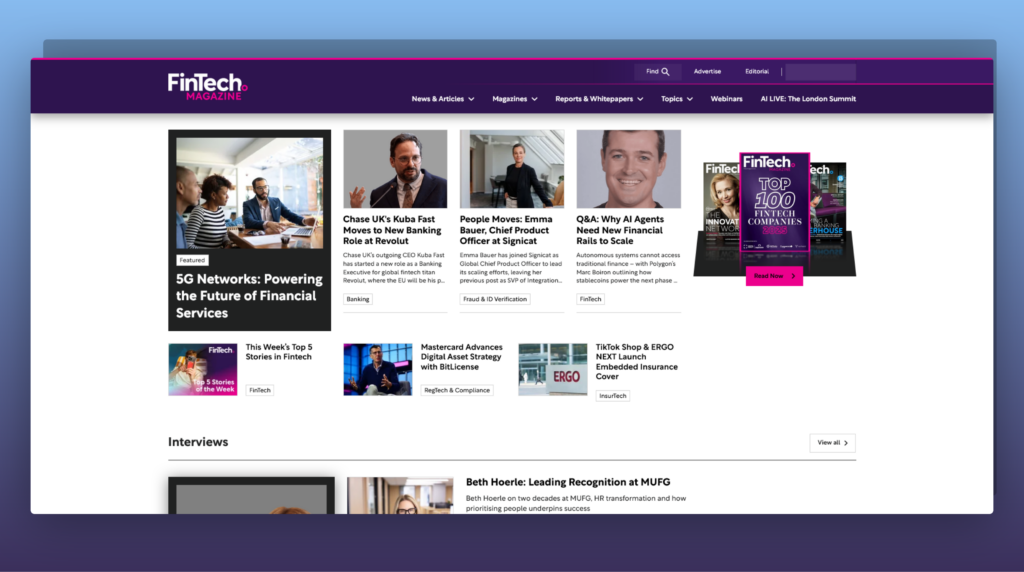
Website: https://fintechmagazine.com
Tagline: Home of Fintech and banking news
Visibility & reCH (source):
- 190,000+ monthly page impressions
- 110,000+ social media followers
- 520,000+ monthly advertising impressions
Overview
FinTech Magazine sits somewhere between a media publication and an executive leadership platform. Alongside news coverage, it publishes a steady stream of C-suite interviews, company profiles, rankings, reports, podcasts and event content covering fintech, banking, payments and financial services. Much of its content is centred around how organisations are approaching digital transformation, AI, sustainability and innovation.
Audience and readership
The publication targets senior professionals working across fintech, banking and financial services, with a global audience spanning North America, Europe and Asia-Pacific. Its content is particularly geared towards business leaders, technology executives and organisations undergoing large-scale transformation programmes.
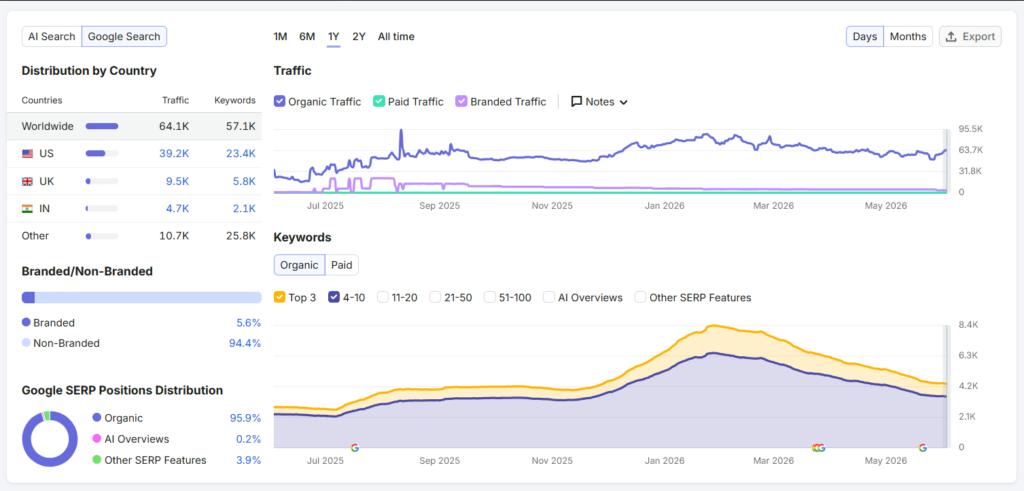
Organic search visibility (SEMrush)
Why fintech vendors should care
FinTech Magazine is often at its strongest when showcasing people and businesses rather than breaking news. That makes it a useful outlet for executive profiling, customer success stories, transformation programmes and broader brand-building activity. Businesses with recognised leaders, notable case studies or significant industry expertise are likely to secure coverage.
Why PR agencies should pay attention to it
The value of FinTech Magazine extends beyond media relations. Interviews, rankings, reports, podcasts and events all provide opportunities to raise the profile of a brand or spokesperson. For agencies running executive visibility programmes, there are often more routes into coverage than with traditional news-led publications.
Editorial considerations and PR approach
The publication responds particularly well to senior executive perspectives, business transformation stories and examples of innovation being delivered at scale. Product launches alone are unlikely to stand out unless they form part of a larger strategic narrative. Think leadership profile rather than news announcement.
Financial Times

Website: https://www.ft.com/fintech
Tagline: “Without fear and without favour”
Editor: Roula Khalaf
Visibility & reach (source):
- 20 million average monthly readers globally
- 3 million+ paying subscribers worldwide
- 700 journalists across 40 countries
Overview
Founded in 1888, The Financial Times is one of the world’s most influential business publications. While fintech is a recognised area of coverage, it sits within a much broader editorial agenda spanning banking, markets, technology, regulation, geopolitics and the global economy. The FT is rarely interested in fintech simply because it is fintech. It is interested when a fintech story reveals something bigger about the future of finance, business or technology.
Audience and readership
The FT reaches an average global audience of almost 20 million readers each month and has more than three million paying subscribers worldwide. Its readership is heavily concentrated among senior business leaders, investors, policymakers and high-net-worth individuals. According to FT readership data, 29% are C-suite executives, 56% are business decision-makers and 75% work for international companies.
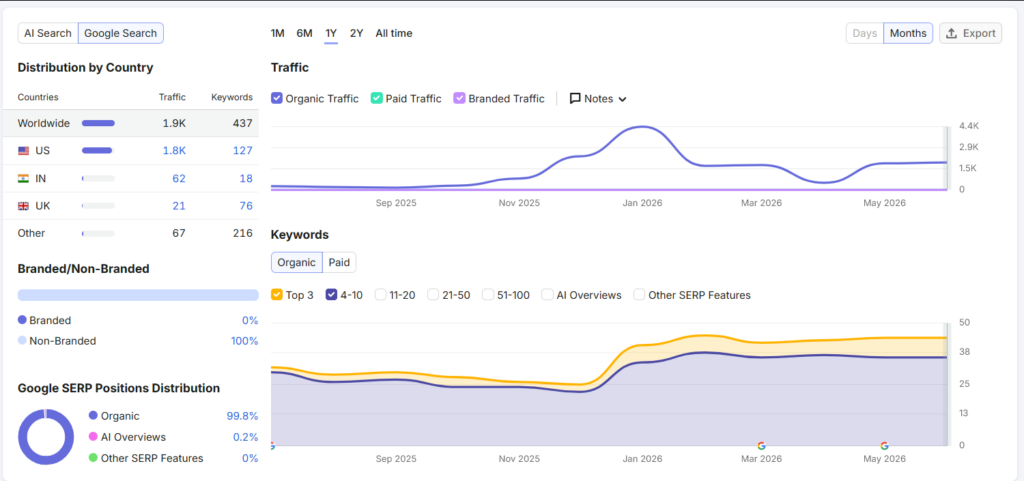
Organic search visibility (SEMrush)
Why fintech vendors should care
Few media brands carry the same level of influence or credibility. Coverage can place a company in front of investors, regulators, policymakers and corporate leaders around the world. For many fintech businesses, an FT mention is less about customer acquisition / lead gen and more about reputation, investor confidence and long-term positioning.
Why PR agencies should pay attention to it
The Financial Times operates to a very different news threshold from most fintech publications. A funding round, product launch or executive appointment that may generate strong trade coverage is unlikely to be enough on its own. Stories generally need broader significance, whether that is a major market trend, regulatory shift, international expansion or a development affecting the wider financial system.
Editorial considerations and PR approach
Recent fintech coverage has explored subjects such as digital bank profitability, private banking expansion, central bank blockchain experiments, crypto regulation and the geopolitical tensions affecting payments firms. In each case, the company involved is only part of the story. Original data, exclusive research and expert insight that helps explain a wider trend will usually travel further than company news alone.
At Sapience, we help fintech brands identify the right opportunities and develop stronger stories across the media that matters most. If you’d like to discuss your fintech PR strategy, get in touch with our team.